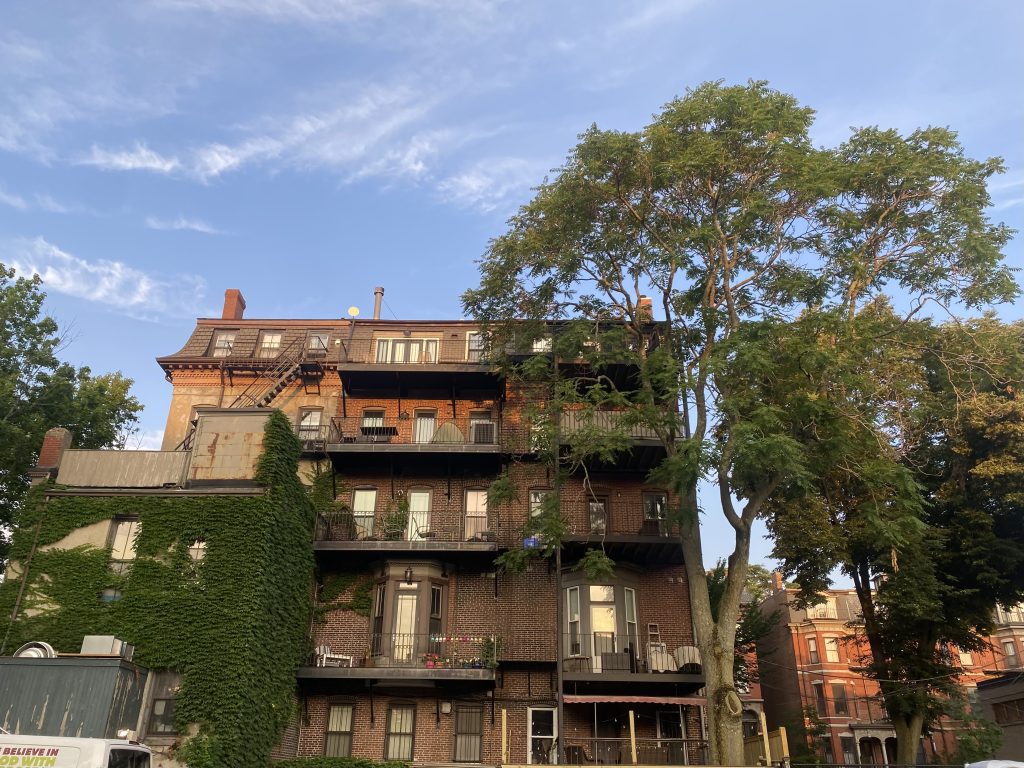
My early morning view of 23 Dartmouth from the parking lot, before a shift in the Soup Kitchen.
Over the last two or so months I’ve been at Haley House, I’ve trellised cucumbers, celebrated graduates of LiFT, read old newsletters, made graphs, planted seeds, and learned how to make banana bread for a hundred people. Through my fellowship with the Forest Foundation, I chose to intern at Haley House this summer precisely because of the variety of services they provide– all surrounding food and community, two things that I am deeply passionate about.
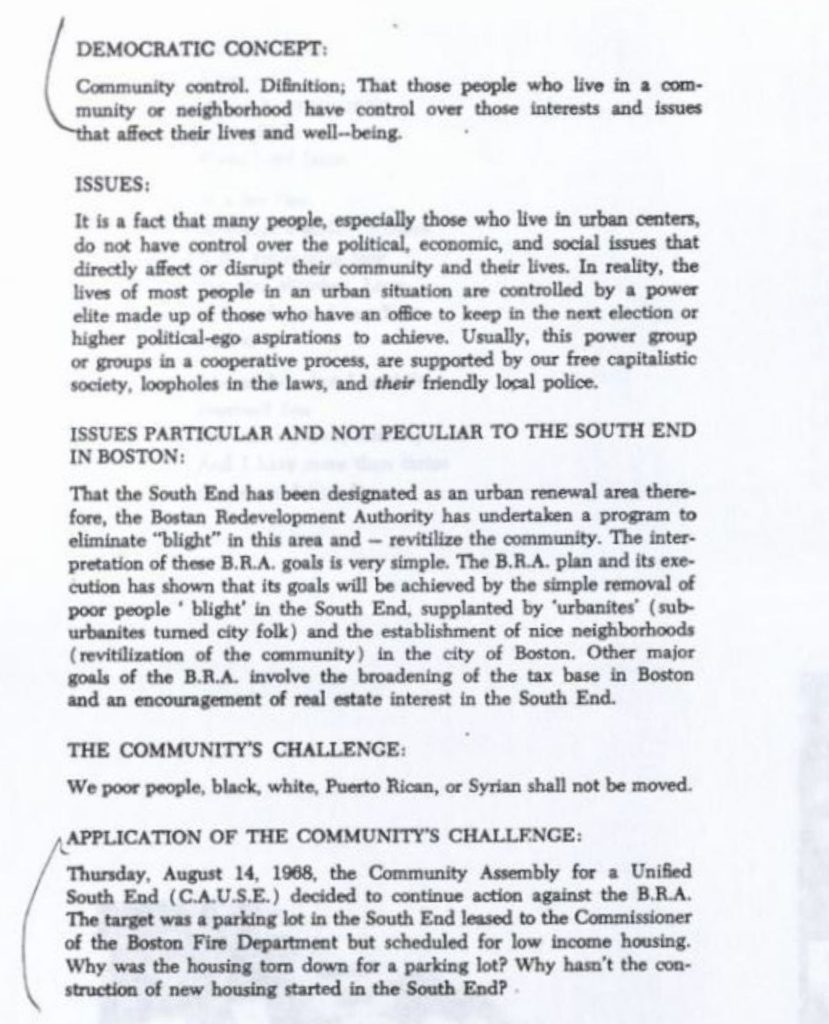
I was deeply interested in Haley House’s history, rooted in the legacies of the Catholic Workers (founded by Dorothy Day and Peter Maurin, who advocated for personalist anarchism and the creation of “houses of hospitality” across the US) and following in the footsteps of the Black Power movement (the Black Panthers pioneered one of the most notable food access services with their free breakfast program, which not only redistributed food to Black children, but also drew attention to the systems of power that deprived Black Americans of stable access to food and affordable housing). Food is political, and access to regular, healthy meals is not a given in our country.
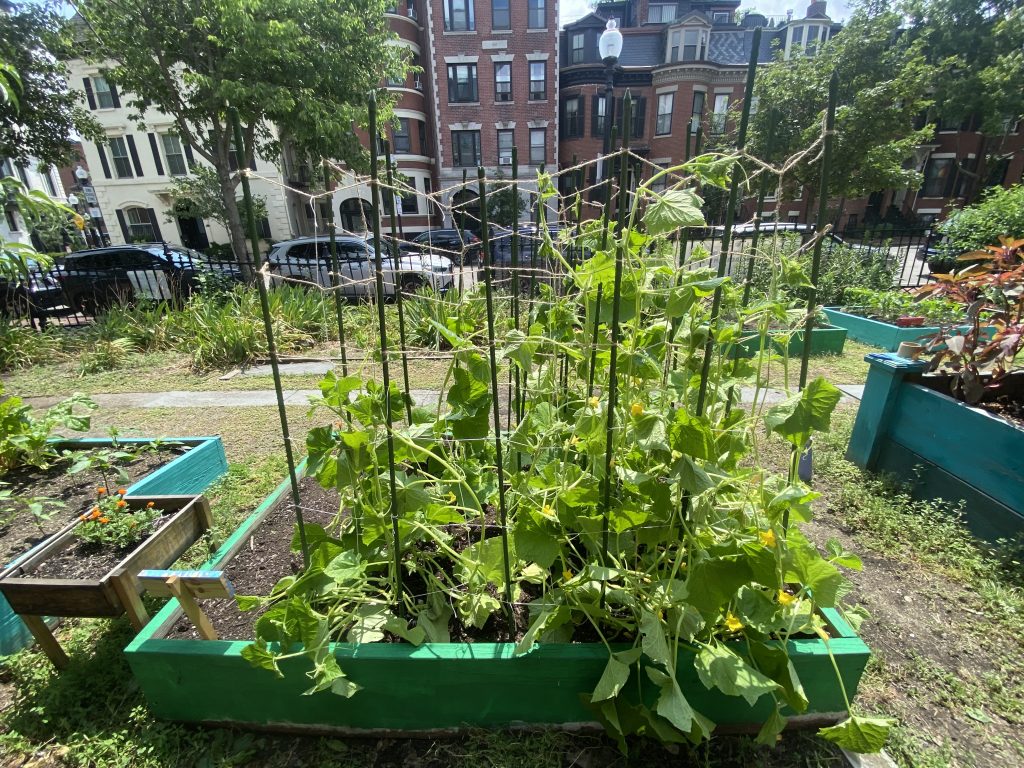
My first time trellising cucumbers, at the Mel King Garden.
I’ve let Haley House’s founding story guide my time here. Looking through old newsletters from the 60s and 70s, I’ve read stories about the Soup Kitchen that ring true today–reflections on what it means to share meals and conversations with people from all walks of life. One of my favorite parts of the summer have been my twice-weekly Soup Kitchen shifts, from 6am to 10:30am. I have become acquainted with the rhythms of the kitchen: the thrum of the industrial dishwasher, live-in community members’ favorite dishes to serve, guests’ favorite topics of conversation, cutting a whole bus bin of vegetables into cubes.
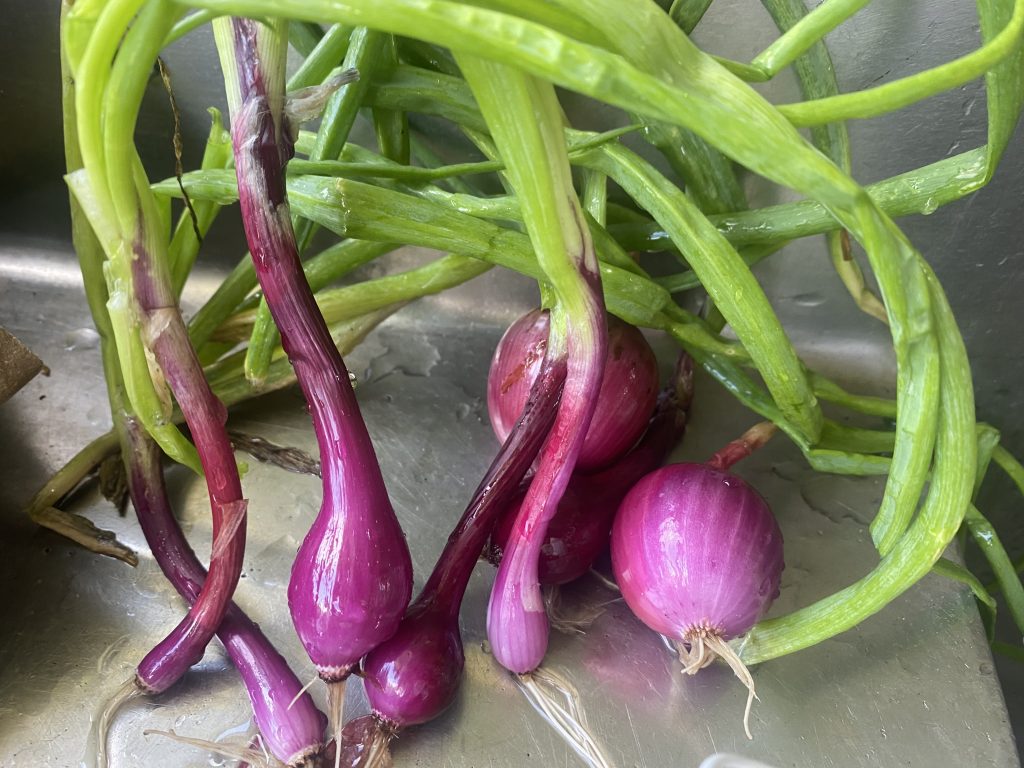
Beautiful red onions from Thornton Street Farm.
Most days after finishing a shift in the Soup Kitchen, I’ve headed over to the Mel King Garden to help Sarah maintain the space. It’s been a good feeling to connect to the land, nourishing and harvesting vegetables on a small plot right in the middle of Boston. I’ve also been able to help facilitate classes with students at the Mel King School, and seeing students (and teachers) interact with the garden has helped me understand just how important it is to connect to the land we inhabit and the food we eat–something that has become increasingly difficult. I’ve felt this sentiment at Thornton Street Farm too, a beautiful spot in Roxbury whose capacity as an urban farm I’ve found inspiring. Just last week, I found myself in awe at the beauty of the many red onions the Teen Farmers had harvested for distribution to Highland Park seniors.
Also in Roxbury, I took part in four weeks of the LiFT Re-entry Program at the beginning of this summer, cooking meals for a cohort of participants. When they graduated, many of them gave short speeches expressing their gratitude for the friendships they had made with one another, the skills they had learned through LiFT, and the help of Sisi and Paulemar over the past months. Their speeches made me cry quite a bit more than I’d like to admit. The prison is a ruthless institution that disproportionately targets Black, Brown, and poor people. Healing from the experience of incarceration is only possible through community.
So, as my time at Haley House comes to an end, I look back on all these memories. I’ve connected with the people and land of Boston, and feel prouder than ever to call this city my home. For this reason, I am all the more insistent that we must abandon the structures of power that surveil and punish, and build communities that value mutuality.
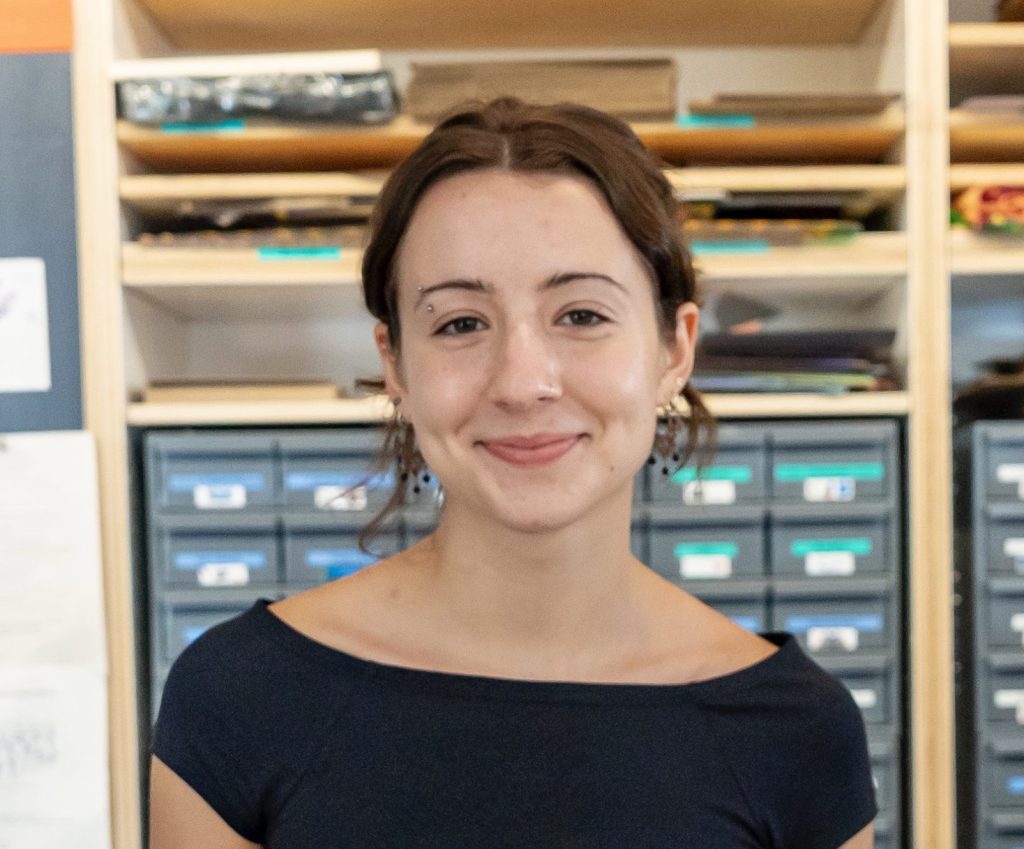
Eliza is a 2026 Forest Foundation intern who joined Haley House for the duration of the summer.
We are so grateful to have had Eliza with us and wish her the best in all her future endeavors! She will always be part of our Haley House community.
“I bequeath to Haley House, 23 Dartmouth Street, Boston, Massachusetts 02116, [the sum of __________ Dollars ($____)] [ _______ % of the rest, residue and remainder of my estate], to be used for its general charitable purposes.”
Sample language to share with your attorney:
“I bequeath to Haley House, 23 Dartmouth Street, Boston, Massachusetts 02116, [the sum of __________ Dollars ($____)] [ _______ % of the rest, residue and remainder of my estate], to be used for its general charitable purposes.”